Showing posts with label book reviews. Show all posts

Monday, October 22, 2012

Children's Books Take Five: A Hush Baby Comparison

When I first had Sofia, I had so much trouble thinking of anything to sing her. I was far enough away from my childhood or my baby-sitting days for any lullaby's to be front of mind. So when someone gifted us with a board book of Hush Little Baby I breathed a big sigh of relief and then said, "duh!"

And then I read the book a time or two, and realized how it models this parenting approach of materialism. The Papa spends the whole song trying to buy lots of presents to keep a baby from crying. Fresh out of my baby-registry craziness, I was feeling like that philosophy had already been sufficiently thrown in my face by all the baby stores of the world. And none of these supposedly fool proof sleep-toys did a thing to soothe my own baby. I kept thinking, "someone should really re-write the words to this song!"

Turns out, someone did! Nearly a decade before I had the thought. Way to go Sylvia Long! I saw this new version of Hush Little Baby in my mother-in-law's children's book collection [she's been preparing for grand-babies with great excitement for a while!]. These new lyrics portray such a sweet, patient, nature-inspired relationship between a mother and child. The illustrations are also beautiful, just as Sylvia's other books. I was so thrilled by this book that I stole it from my mother-in-law (with permission) and brought it home with us.


And yet, as much as I prefer the message of the above Hush Baby, the illustrations of the original board book we had seem to be far and away Sofia's preference. The illustrations do feel clever, I must admit. And in fact, I appreciate that in these illustrations, it is not just one mama comforting the child. The baby looks to be much more of a terror than the "blue hush baby," as Sofia calls it. This baby is really screaming his head off. But his WHOLE family, big sister included, is there working to the brink of utter exhaustion to help calm and comfort him. The story told through those pictures, of all that family does for that baby, make the last line "you'll still be the sweetest baby in town" so much more sweet. They communicate, "no matter how crazy you make me, I will still love you." The pictures almost overwhelm the materialistic message of the song. Good work, Marla Frazee!


So, torn between good aspects of each, we hardly ever read one without also reading the other. 

P.S. The other Sylvia Long book we own and enjoy is Ten Little Rabbits, a sweet counting rhyme with beautiful Native American style.

Thursday, October 18, 2012

Children's Books Take Four: Madlenka

Madlenka ~ Peter Sis

Madlenka's tooth is loose, and she has to tell everyone. She runs around her city block in New York to share the exciting news. Through her journey, she encounters friends from several countries, and in the end, announces to her parents that she's been around the world, and she lost her tooth. It is a sweet story of our globally integrated society and the diverse nation we live in. And I personally feel that the illustrations are what really make this book so magical. The graphic layout that illustrates her run "around" the world and the fantastical pictures that show her exploring each friend's unique universe really enhance the beauty of the story.

Right this minute, I really love books that provide natural teaching opportunities that jump off the page. The more we read this book to Sofia, the more she wanted to read it. And the more that she read it, the more fun she had talking about how "Mommy went around the world" or "Sofia went around the world." We read in a library that's on one corner of a bit of a circle around our stairway, so as she kept laughing over this one phrase, I realized, we could really go "around the world!" So I quickly scratched out some little signs with the names of each continent and posted them up in the different spaces around our stairway. I grabbed Sofia's hand and announced, "This is Africa," ran to the next spot, "Now we're in Europe, let's fly to Asia" and so forth. When I came full circle, I could announce, "Sofia! We ran around the world! Just like Madlenka!" and her mind pretty much exploded with happiness. We run alot of laps now, which is great as we've been having alot of rainy days lately and need a way to get energy out indoors. It's not that I think a child under two needs to know her continents, but it has been a really fun way to act out a story she loves and get physical with our imaginations. And it is pretty cute hearing her try to say "Antarctica." Thank you, Madlenka, and Peter Sis, for inviting us into this beautiful adventure!

Tuesday, October 16, 2012

Children's Books Take Three: In a Blue Room


In a Blue Room ~Jim Averbeck, illustrated by Tricia Tusa

This is one of the sweeter nighttime books I've ever come across. We used to read Goodnight Moon to Sofia every night, and now In a Blue Room has replaced it. Somewhat for variety, somewhat because Sofia's growing out of Goodnight Moon, and somewhat because I think it's just better. But something tells me I might draw some flack for that statement.

Alice does not want to go to bed in anything but a blue room. Her mother very calmly brings in sleep aids that stimulate all of her senses, but each thing contradicts Alice's demands for blue. As bedtime draws nearer, the lights eventually click off, and all the colors of her sleep aids are blanketed in a "pale blue light." I love the creative concept, the soothing poetic language, the model of a mother who can stay calm through a stressful daily routine (an encouragement to me!), and the magical illustrations. Much like Goodnight Moon, it's natural to memorize the entire text. And I can testify that the calming example has literally encouraged my support of Sofia through challenging bedtimes, as well as her ability to focus, calm, and relax on similar sorts of nights.

After our library due date ran out, I had to buy our own copy because I simply could not let it go. I can't seem to get enough of this one!

Sunday, October 14, 2012

Sabbath Sunday: Children's Books Take Two: Perfect Square


Perfect Square ~ Michael Hall

Why am I bothering to recommend a children's book on a Sunday, you ask? Because I believe this book is a beautiful illustration of Sabbath. Much along the lines of another great new children's book, Beautiful Oops! by Barney Saltzberg, perfect square shows that sometimes mistakes or injuries can be transformed into something beautiful. It's a valuable lesson to learn in art, and it is a beautiful lesson to learn in life.


Hall's book is simple and creative with a story of a square whose sides become less than perfect day after day. But what makes it a great Sabbath book, is that after restoring imperfection to beauty Monday through Saturday, on Sunday, nothing bad happens to the squares perfect sides. He comes to feel even bored by the lack of activity or challenge. But he realizes that he can sit back, and become a window, through which to view the beauty that he's created the rest of the days of the week.

I think of how God sat back, on that first Sabbath day, surveying the work of His week, and He said, "It is good." It was so good, it took Him as long to take in the joy of it, as it did for Him to create each thing. Isn't that a beautiful thought? I have no idea what Hall's intentions were, but I enjoy and recommend reading this book on a Sunday, and use it as a prompt to look back, and see what good God has been up to, transforming you this week! (and feel free to share in the comments!)

Wednesday, October 10, 2012

Children's Books Take One: Clorinda the Cow

Sofia is finally entering into the world of picture books, by which I mean she does not instantly consume everything we read with her teeth. We are going a bit hog-wild at the library and spending hours at home tearing through books, some of them over and over, now that I can trust that we can return them safely in one piece.

Before I was a mom, I had this idea that children's books were all golden classics that would give me warm fuzzy feelings and beautiful ideas to ponder. Turns out that's not the case. There is a shocking amount of stupid stuff out there. And frankly, there is a surprising amount of material I really do not want Sofia to be exposed to. It's just plain bad. But when you're confronted with a large room filled with shelves, it's a bit overwhelming to sort through it all.

I find myself comparing notes with other moms about good books to keep an eye out for, so I figure, why not share them here, where perhaps more people can benefit. I'll post some suggestions as they come. If you have some tips to share, please do comment! Small note: if you click on the images of the books, it'll link you to Amazon. If you purchase these books from there, Amazon will send Emily and I a little cut. Thanks in advance ;)

I don't want to rail on all the bad books or become a censorship police. My hope is to steer you towards books that are edifying so you don't have to waste your time, or your child's attention span on things that are not.

Without further ado, here is one of my new, two-claws-up, favorites:


Clorinda Takes Flight ~Robert Kinerk, illustrated by Steven Kellogg


I have loved Steven Kellogg's illustrations since I was a kid, The Mysterious Tadpole remains one of my favorite children's books.


He continues to do a fantastic job illustrating the Clorinda books. Very colorful and imaginative, with creative little details hiding here and there.

In this and the other Clorinda book we've read, Robert Kinerk writes thoroughly uplifting poems whose lines are fun to read. (I am looking forward to reading Clorinda Plays Ball, because it's more Clorinda, but I'm not huge on baseball, so I'm a bit nervous.) 


Clorinda has big dreams. Being a cow, she also has big limitations. But she pursues her dreams, she turns to her friends for help. Even when she faces failure, she acknowledges what she can and can't do, adjusts her dreams, and finds beautiful ways to be happy and share her happiness. I love Clorinda and her pal Len! You can just sense that these stories were written from a place of great love. It's hard not to love them in return. 

Well there you go, four tips on one. I hope you find this little series helpful. Happy reading, Lobsters!


Thursday, April 19, 2012

books, books, books

Lobsters, how do you keep up with our blog? Do you visit the website? Do you wait for us to post on facebook? Are you an email subscriber [see the right hand side of our home page, scroll down a bit, "Follow us by email"]? Blogger follower? Or do you follow through Google Reader?


I follow my blogs using Google Reader. It's a great way to have all the posts I want to read gathered into one place in a way that shows me only the posts I haven't read yet. So efficient, I love it. Thing is, I apparently follow a ton of prolific writers, because I am well over 200 posts behind in my blog reading. Yikes! That might also have something to do with the fact that I've been pretty sucked into some interesting reading lately. In case you're looking for your next good read, here's a quick recap of the past handful of books I've read this winter (some of which I've already mentioned in previous posts).


One Thousand Gifts by Ann Voskamp. Getting lots of good attention lately. I started by following her blog and had to read her book. She is a very poetic writer who digs in deep both into her own story and experience as well as a rich history of theologians who have wrestled with her questions around the problem of pain. Reading this was good for my soul.


Under the Banner of Heaven by Jon Krakauer. Ugh. This book is graphic and dark and in my opinion, manipulatively written to attempt to use narcissistic murders as a case against all religion. Unfortunately, it was a total page turner. Reading this book was not good for my soul, but it was rather informative (though heavily biased) regarding the history of Mormonism.


 A Walk Through the Bible by Leslie Newbigin. I needed to cleanse my pallet after the above. For all my years in Sunday School, it was really helpful to get one clear overview of the whole story told throughout the bible. This is such a quick read, and so helpful. If you have ever felt curious about Christian scriptures, this is a useful tool!


Surprised by Hope by N. T. Wright. This is its own kind of page turner. His writing style isn't poetic or even what I would call "beautiful," but simply put, the content has changed my life in a big way. Too big to recap here, so just keep an eye out for a slew of blog posts with the label "surprised by hope" to follow all the thoughts this book has been spurring in me. 


Meals with Jesus by Tim Chester. I was so excited by the premise of this books: food + Jesus. Unfortunately, I was a bit disappointed in the end. He tries so hard to get a broadly comprehensive collection of all the meals remotely related to Jesus, that he doesn't end up getting as deep and clear into the material as I was hoping. That said, I retrospectively realized that after reading it, I accidentally arranged to host 5 meals in 14 days for a total of almost 40 people, so apparently it spurred me to action [or lunacy?], which is a valuable accomplishment for any book, getting people to actually change their behavior. 


Outliers by Malcolm Gladwell. I know this book is so last-last-season, but I finally got around to it. Better late than never. Gladwell is a great story-teller and this was great fuel for my research synopsis addiction. I love his project of shifting us from thinking of "self made men" to understanding the power of the community that surrounds any greatness. I was also pleasantly surprised by how personal he made this collection in the end. I wasn't totally satisfied with his discussion around "concerted cultivation" as I don't believe parenting truly comes down to so simple a dichotomy. But, it has me looking around my own life to wonder what project I'd want to invest 10,000 hours of my time into (assuming I ever had 10,000 hours to spare - does mothering a child count? Can that be my expertise?), or what history is leading up to and ready for that I might have to offer. 


What have you been reading this winter, Lobsters? Any recommendations? Any thoughts on these books above? 

Friday, January 27, 2012

Dear BARB,

Dear Ms. Ehrenreich,


I recently moved to Maine and participated in Brunswick's Community Read of your book, Nickel and Dimed: On (Not) Getting By in America. Since you're coming to town today to discuss it with us all, I thought I'd jot some responses down in a letter to tell you about how much I appreciated your work, since I'm sure I won't have a chance to tell you all of this in person. The Help is all the rage right now, with the movie and all, and your book is somewhat like a modern day version that provides us with a similar service/critique, without the luxury of looking back on people in another time to blame, we have our own opportunity to change in response! 


In all honesty, I entered the book with skepticism. A number of ethical dilemmas troubled me as I learned about your project to pose as a low-wage worker and see if you could get by financially. I worried about your deceit of the people you'd come into contact with, and that you would presume that if you could make it, than others should be able to. But I found you humbly acknowledging your privilege of class, education, and color. As a white middle-class woman myself, figuring out how to live with my own privileges has been a major project for me, and I appreciate your modeling an honest approach to working that out.


Discussing the book prior to reading it with another woman here in Brunswick, we prepared ourselves for a real heavy downer. I was again surprised by how amazingly entertaining you could make a story about such drudgery and injustice, without cheapening the lessons learned or the experiences endured by yourself or others. My husband and I read it aloud to each other and more than once feared that we woke our sleeping baby by bursting out with uncontrollable laughter. You are so fun to read!


Your stories brought to mind a variety of people I've encountered over the years. In preparing for my Masters in Social Work, I had to attend some community college classes to cover some pre-requisites. Having been raised with lots of educational privilege, I never expected to set foot in a community college as a student, but it was necessary. I thought so highly of myself for working my full-time non-profit job AND attending multiple classes at night. It was one of the more stressful seasons of my life, juggling it all. But I sat down in that class and was confronted with a room packed with middle-aged females, most of whom had at one point been on welfare, had multiple mouths to feed, rarely had a partner helping them carry the load, held down multiple jobs, AND attended multiple classes at night. I was thoroughly humbled. They knew so much more from life experience about what I was trying to learn from books. Reading your book made me even more frustrated because I can not imagine how, on top of all you did, you could have managed to pay for and attend classes that would have enabled someone in your position to get higher paying jobs (of course, you already had your PhD). And yet, these women saw that this was their only way out, they had been told the burden was on them to get themselves and their families out of this cycle of poverty. I'll never understand how they did it.


Your book challenges me to live a life with less greed, because my own greed affects people, not just my own soul. Your book also makes me feel like one answer to this problem of class separation and repression is to live in community with people that are different from me. Instead of being paralyzed by the guilt of my privilege, I have found my most productive endeavors have involved doing life with people that are members of the working-poor, homeless, or just different classes or sub-cultures. In doing life together, we don't have to depend on welfare as it comes and goes (not that I think it needs to go), I can be the one to write that check to cover my friend's shortfall for rent this month. In doing life together, I can see what life is like in a very personal and real way. Because it is affecting my friend, I have much more reason to change how I live and find solutions to these huge problems. I have much less reason to be ungrateful for all that I have been given. We can break down some of the walls that create isolation and "pariah" syndromes and generalizations of the other that deepen the conflict and avoidance. This is perhaps the messiest, most difficult solution to the problem, but I believe it may get to the core of what is truly wrong. I thought the way you did this living-life-with another at the end of your chapter on Minnesota, when news of the strike shows up on the break room TV and you connect with the other woman there who was suffering, was truly beautiful.
 Speaking of being in relationship, doing it honestly so often requires repairs and reconciliation because it is so easy to hurt one another. I've never met you before, so we're not exactly "in relationship," but I do feel compelled to apologize to you, to seek some degree of reconciliation. One of the truest and hardest-to-swallow portrayals in your book was that of the Christians you encountered. I am a Christian and on behalf of my brothers and sisters, I need to issue you an apology.


Your critique to the participants in the tent revival was entirely on point. We, American Christians need to spend more time reading the whole Bible, and stop dodging passages like the Sermon on the Mount. We make an idol of the "god" we are comfortable worshiping, instead of serving the God that requires a much more difficult and humbling obedience. Thank you for calling us out on that problem!


Secondly, I am a horribly cheap and miserly person. I tremble to think of how many Sundays I went from church to lunch out and gave a disrespectful tip to a server, thinking I was being a good Christian "steward" of my resources. I don't know how many times I must have done that, or how many servers I've done it too. I can't apologize to those servers, but I wish I could say I am sorry being so manipulative in my understandings of theology so as to serve my own interests instead of those of the God I claim to love. Your book helped me receive the beautiful service from a waitress yesterday with so much more appreciation. Thank you. 


Lastly, I was brought to tears by the last paragraph of your afterward. You say:


"If we want to reduce poverty, we have to stop doing the things that make people poor and keep them that way. Stop underpaying people for the jobs they do. Stop treating working people as potential criminals and let them have the right to organize for better wages and working conditions. Stop the institutional harassment of those who turn to the government for help or find themselves destitute in the streets. . . . But at least we should decide, as a bare minimum principle, to stop kicking people when they're down."


More than just agreeing with you, in reading those words, I heard echoes of the prophet Isaiah in one of my favorite chapters of scripture. God's people think they are being so wonderfully religious, and yet God is not granting them all the things they keep asking for from Him, and they are perplexed. In response, through Isaiah, God basically says, in old school speak, just exactly what you said. So, I am sorry we live so offensively, but thank you for speaking a truth to us that we have been needing to hear for thousands of years, a truth God's been trying to teach us. I hope you can see past us, failed image-bearers that we are, and find your joy in the Lord, just as Isaiah promised. Thank you. 


Sincerely,
Zoe Reyes


Isaiah 58:
1 “Shout it aloud, do not hold back. 
   Raise your voice like a trumpet. 
Declare to my people their rebellion 
   and to the descendants of Jacob their sins. 
2 For day after day they seek me out; 
   they seem eager to know my ways, 
as if they were a nation that does what is right 
   and has not forsaken the commands of its God. 
They ask me for just decisions 
   and seem eager for God to come near them. 
3 ‘Why have we fasted,’ they say, 
   ‘and you have not seen it? 
Why have we humbled ourselves, 
   and you have not noticed?’
   “Yet on the day of your fasting, you do as you please
   and exploit all your workers. 
4 Your fasting ends in quarreling and strife,
   and in striking each other with wicked fists.
You cannot fast as you do today
   and expect your voice to be heard on high. 
5 Is this the kind of fast I have chosen,
   only a day for people to humble themselves?
Is it only for bowing one’s head like a reed
   and for lying in sackcloth and ashes?
Is that what you call a fast,
   a day acceptable to the LORD?

 6 “Is not this the kind of fasting I have chosen:
to loose the chains of injustice
   and untie the cords of the yoke,
to set the oppressed free
   and break every yoke? 
7 Is it not to share your food with the hungry
   and to provide the poor wanderer with shelter—
when you see the naked, to clothe them,
   and not to turn away from your own flesh and blood? 
8 Then your light will break forth like the dawn,
   and your healing will quickly appear;
then your righteousness
[a] will go before you,
   and the glory of the LORD will be your rear guard. 
9 Then you will call, and the LORD will answer;
   you will cry for help, and he will say: Here am I.

   “If you do away with the yoke of oppression,
   with the pointing finger and malicious talk, 
10 and if you spend yourselves in behalf of the hungry
   and satisfy the needs of the oppressed,
then your light will rise in the darkness,
   and your night will become like the noonday. 
11 The LORD will guide you always;
   he will satisfy your needs in a sun-scorched land
   and will strengthen your frame.
You will be like a well-watered garden,
   like a spring whose waters never fail. 
12 Your people will rebuild the ancient ruins
   and will raise up the age-old foundations;
you will be called Repairer of Broken Walls,
   Restorer of Streets with Dwellings.

 13 “If you keep your feet from breaking the Sabbath
   and from doing as you please on my holy day,
if you call the Sabbath a delight
   and the LORD’s holy day honorable,
and if you honor it by not going your own way
   and not doing as you please or speaking idle words, 
14 then you will find your joy in the LORD,
   and I will cause you to ride in triumph on the heights of the land
   and to feast on the inheritance of your father Jacob.”
            For the mouth of the LORD has spoken.

Tuesday, December 13, 2011

Lobstering: The Social Animal

If this whole blog is about cultivating long distance friendships, and/or strengthening relationships, might we, in this context, refer to "putting intentional effort into our relationships, be they near or far" as "Lobstering"? eh? What do you say? I think it'll become a thing. 


So I recently finished reading an awesome book called The Social Animal by David Brooks. I really try to be open minded about what I read, and no matter how I feel at the start of a book, I really push myself to finish it to give it a fair try - holding out hope for those bad ones that there will be a redeeming twist at the end. Sometimes, I'm better off just letting the book go, telling it, "I just want to be friends." Other times, I really don't agree with all that the book has to say or all that it purports, but overall, I might find it sufficiently edifying or at least thought provoking that I am still likely to recommend it to the right person who might also appreciate it. In other words, I actually do want to be "friends" with those books. VERY very rarely, (or ever?) do I come across I book that does not include a disclaimer, "I don't necessarily like everything s/he has to say, but . . ." I simply can NOT find such a complaint about The Social Animal. It does not start off too slow, it does not end poorly, and I don't think I can disagree with him on any idea he seems to be trying to promote. I think I have found a book with whom I am no longer content to just be friends. I am in love. Consider me stunned.


In this quasi-novel, Brooks is pulling together lots of neuroscience research he finds interesting into the form of a story about two people who manage to have a happy life. I love stories, I love research-digests. Win. win. Throughout the story, he manages to touch on romance, extended adolescence [apparently this is now a life stage called "odyssey"], parenting, vocation discernment, politics, fidelity, morality, learning, nature, religion, creative processes, memory, living the good life, and the integration of the subconscious with reason, all topics I'm regularly energized by. He also, by the way, put forth his own interesting explanations about adults being single into later stages of life, a topic I obviously ponder on a bit (see pages 188-189 of the book for yourself). 


A few of the big take-away's for me were:


1) How much neuroscience is now reinforcing the more feminist viewpoint that who we are and the quality of how we live is strongly determined by the number and health of the relationships we maintain. Furthermore, that I am living in a life stage and era where this is particularly difficult due to our transitory generation:


“Cities have become the career dressing rooms for young adults. They have become the place where people go in their twenties to try on different identities. Then, once they know who they are, they leave. Thirty-eight percent of young Americans say they would like to live in Los Angeles, but only eight percent of older Americans would. Harold’s friends would show up in San Francisco one year and then Washington, D.C., the next. Everything changed except their email addresses.” (p. 188)


2) Martin Luther was right when he said that "Reason is a whore." We can manipulate logic and even science to produce whatever point we want to come out with. Without something more than reason, without acknowledging the power, importance, and value of morality and our emotions, we can not live life fully and our communities will be diminished. Here's a quote I loved:


[p. 286]


3) The questions we ask and the memories we make are going to be the key things that give our lives value as we look back on them.  Here's a great snip-bit along those lines:


[p. 364]


If you have or do check[ed] the book out for yourself, I'd love to know your thoughts. I'll leave you with one of my favorite quotes, the sentences that speak most clearly to the importance of "Lobstering," my Lobsters.


I give The Social Animal by David Brooks a hearty two claws up!


Tuesday, October 18, 2011

Playing the Justice Card

Crowds occupy Wall Street crying out for justice. I am excited for this energy, accountability, and cooperation. I think the groups that keep joining the effort are wise to combine their energies instead of competing against one another to have their lone voice heard above the competition. And who can argue against justice? I heard a journalist say yesterday that the "99%" are actually the "100%" because even the investment bankers and corporate tycoons sympathize with this cause. 


Right now, Justice is a big buzz word, and it is also a powerful trump card. The ace of spades, if you will. And yet, I recently came the understand through some reading, that playing that ace is trickier than it seems. I think these groups may experience more trouble than they anticipate in spelling out just what they mean by "justice." I recently finished two books that speak to this theme in interesting ways. 


First off, Generous Justice by Tim Keller. Keller gets quite a bit of praise, bordering on idolatry, in certain circles. So I  avoided reading him for as long as I could. Thing is, he is good and really worth reading. The other thing is, he doesn't necessarily have all that many original ideas, but he is great at synthesizing key philosophers/thinkers/theologians/etc. Therefore, for a good, current day relevant synthesis on how to be challenged to consider why justice matters, and how to start figuring out what justice actually is, you really should check this out. 


I considered myself someone who had the right ideas and right behavior with regards to justice before reading it, and was both encouraged and challenged to consider things more carefully and figure out how to act more consistently. In case you don't have a chance to read it yourself [it's a nice quick read, so stop making excuses ;) ], one key point he makes that I think is particularly relevant to Occupy Wall Street, is that the roots of our ideas of what justice is are necessarily moral [and therefore religious in at least some sense]. We can not throw around the term "justice" like a sledge hammer or an ace card that lets us win any argument. Justice means differing and often conflicting things to different people. And in a secular society that outlaws public discourse on religious ideas, we can not have a real, resolvable conversation about justice until we start admitting our moral/religious beliefs. I should stop trying to say what he has already spelled out more clearly, so just go read it.


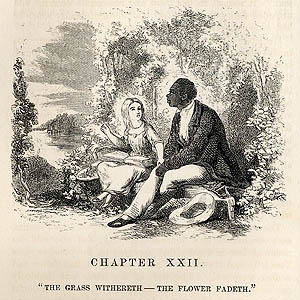
The second book is slightly less direct than Kellers, but I was surprised by how relevant I found it to be. It presents some challenging questions about justice, morality, and integrity in the form of a story. Have you read Uncle Tom's Cabin by Harriet Beacher Stowe? It is a classic I had obviously heard of, and pretended to know about more than once, but I had never read it and I've never heard of it being part of any standard curriculums. But when I found out that Harriet moved to the town I live in because her husband was a professor at the college where my husband is now a professor, I felt an affinity with her and wanted to know more about her and her work. 


Wow. While it may have taken me a little while to get into, it really caught me up once I did. Turns out, it is a collection of real stories Stowe had either witnessed or heard about slaves, slave owners, and northerners who refused to dirty their hands with slave ownership on moral grounds. And while it may not really make for a terribly cohesive overall narrative, the stories are compelling and engaging, and at times tear provoking. While the character development pulls your heart in, these people who come to life before you hold these fascinating conversations. 


It doesn't seem like we need to read a book today to convince us that American plantation slavery is bad (though I realize that modern day slavery is a serious and pervasive problem), but Stowe gets into these subtle particularities of humans engaging with this old problem. She does this in such a way as to challenge my morality today, making me realize that while slavery isn't a moral issue I feel any ambiguity about (perhaps thanks to her - Lincoln credited her as the "the little woman who wrote the book that started this great war."), I have some important questions to consider about what justice really is and how I am living that out. For any christians reading this post, you might be interested to realize how Christ centered the book is. She has some challenging points regarding foreign missions. She also points out that moral issues can not be so simply resolved by deferring to the opinion of your local church, or by playing a trump card like, "the bible says . . . " as there can really be so much division even underneath these seemingly authoritative claims. [watching the God in America documentary series while I read this really enhanced both experiences by the way!] Also, the incredible love for scripture that is woven throughout the book is really beautifully displayed. 


If you have to pick only one of these books, I might actually steer you towards Uncle Tom's Cabin. I think it will get into your heart in a way that might hopefully spur you towards positive change (if you are willing to use some imagination to consider how to apply old points to modern day) in a way that Keller's smart, rational, well articulated arguments won't necessarily do the trick. Also, classics like that are easy to find for free or for cheap, so that's cool. But both are certainly worthwhile if you have the bandwidth. 


Have you read either of these books, Lobsters? What have you thought?

Thursday, July 21, 2011

What should I read next?

What are your greatest fears? Public speaking? Showing up in public naked on accident? Death? 


You know what I'm really afraid of? Being stuck somewhere without paper and pen to write with and a book to read. Seriously. My husband always makes fun of me for how I pack. Even if we're just going somewhere overnight, I have to pack multiple books - so I have a book I'm actually in the mood to read. Sometimes you want a beautiful thought provoker, sometimes you want some silly brainless fun, but then there's always the random wild card. 


Maybe you can understand that having to put all my books away into boxes in preparation for our move, I'm feelin' pretty anxious. Granted I've got enough pages on my current book to last me probably until and through the move - just the thought that I could finish and not have enough books available makes me start to grind my teeth.


I used to be a compulsive book buyer. I currently have multiple boxes of books in three different cities. That's after several sessions of trying to go through them and take as many as possible to used book stores. 


[sidebar: One of my favorite literary passages is in Italo Calvino's If On a Winter's Night a Travelerwhere the author walks you through a book store, not categorized by genres, but organized instead according to your experiences with books - probably inspired High Fidelity's autobiographical organization of albums. I can't do it justice, you should check it out for yourself.] 


Recognizing that I had a problem, I made a rule for myself a while ago that I had to read three books before I was allowed to buy another one, and that helped me curb the habit. I hardly ever buy books anymore, but that means that when I do, they really better be worth it. 


If you can remotely identify with me on any of this, you can perhaps share my excitement when I read Joanna Goddard's tip on this website that helps you figure out what to read next. It's like getting lost in a rabbit trail of movie trailers, checking out potential books to dive into. This is doing wonders to calm some of my weird anxieties. 


But here's the thing, I can't just trust a website, I need some testimonials to help me out. So while I'm dreaming about the day when I'll let myself buy my next book, you can help me make a good choice by giving me some input. 


Some recent books I've read and enjoyed lead to some potential suggestions:


Divisadero
1) Divisadero by Michael Ondaatje. One of my favorite authors, Ondaatje's background as a poet clearly comes through in his prose. He's from Sri Lanka, where I studied abroad, and a good portion of the book takes place in the Bay Area, my most recent home. He pays beautiful homage to place while spinning riveting character development throughout an unconventional plot structure. 


Out of the recommended list, Saturday by Ian McEwan interests me. I enjoyed Atonement [thanks for lending that to me Emily!]. Is this one worth checking out?


Bossypants2) Bossypants by Tina Fey. For my thoughts on that, see our conversational review post if you missed it. 


mmm . . . weird list of rec's. Possible website fail. Looking for hysterically funny here people. Not sure how Jane Eyre makes that list - good - but not quite what I'm going for with this one. Maybe Goodnight Nobody by Jennifer Weiner? 


The Philosophical Baby: What Children's Minds Tell Us About Truth, Love, and the Meaning of Life3) The Philosophical Baby by Alison Gopnik. It's full of research from all sorts of fields from Psychology to Computer Science, and it's woven together by great philosophical questions, and it's about babies. This woman foresaw my pregnant-waddle-entry into that Pegasus bookstore the day I found that book and wrote it just for me. I wasn't 100% satisfied, but I was quite stimulated and entertained. 


This one only yields a singular recommendation: Richard Wiseman's 59 Seconds. In reading about it I feel both intrigued and skeptical. Any input?


Hmmm . . . looks like I really need some back up. Have any Lobsters out there read these books? Got any thoughts? Should I check them out or stay away? Anyone else have fun with this "What to read next" website, or found it useful?